





























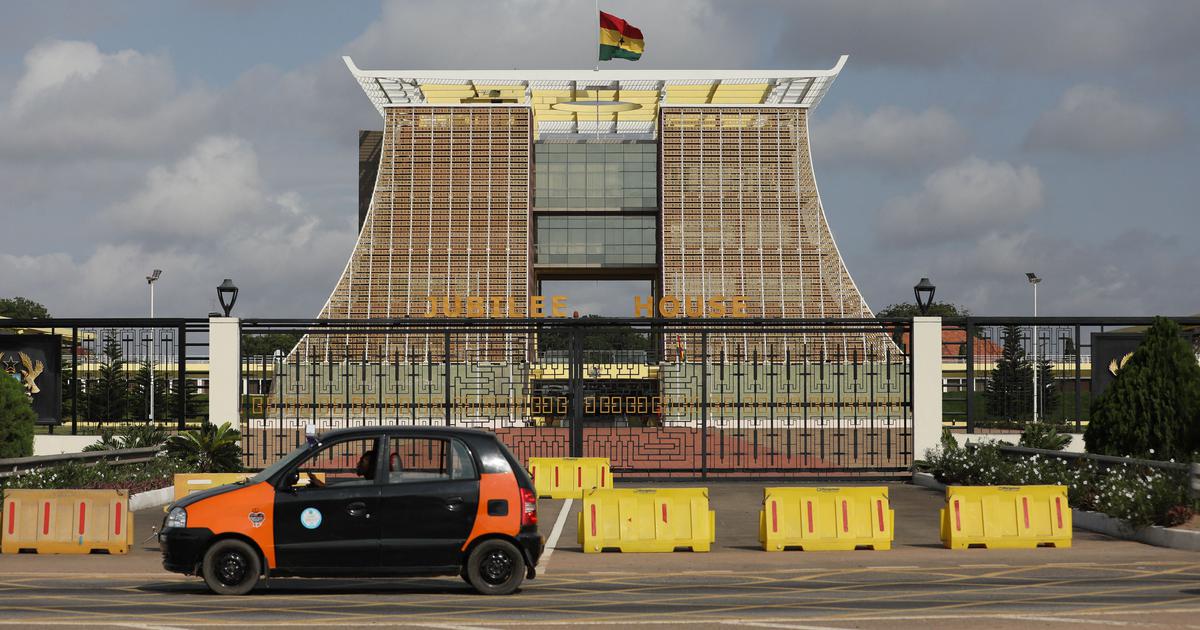
Why India built the seat of Ghana’s government and what that says about global relationships
Join our WhatsApp Community to receive travel deals, free stays, and special offers!
- Join Now -
Join our WhatsApp Community to receive travel deals, free stays, and special offers!
- Join Now -

The call to prayer echoes across the neighbourhood as people congregate under the sweeping domes and tall minarets of Ghana’s National Mosque in Accra. For many, it is a place of faith, community and national pride. Yet, few pause to consider that this landmark – now firmly part of Accra’s skyline – was funded and built by Turkey.
This detail points to a bigger story. Some of Ghana’s most important public buildings are shaped by global relationships as much as local needs. And those relationships are not just economic; they are deeply political.
Therefore buildings are not just functional. They are powerful expressions of political power, used to describe and project ideas about hierarchy, state authority, solidarity and modernity.
As a result, architecture can be used to explore the identity and ideology of African states and international partners who choose to finance or donate new buildings to Africa featuring western architectural aesthetics.
I am a scholar of African architecture. I collaborated with scholars from different areas of expertise, including political scientists, on a project that studied the connection between architecture and power in Africa.
From Ghana, two projects were used to illustrate international relations in architecture, highlighting the interplay of power and agency. One was the National Mosque and the other was the seat...
Read more
What's Your Reaction?
 Like
0
Like
0
 Dislike
0
Dislike
0
 Love
0
Love
0
 Funny
0
Funny
0
 Angry
0
Angry
0
 Sad
0
Sad
0
 Wow
0
Wow
0