


























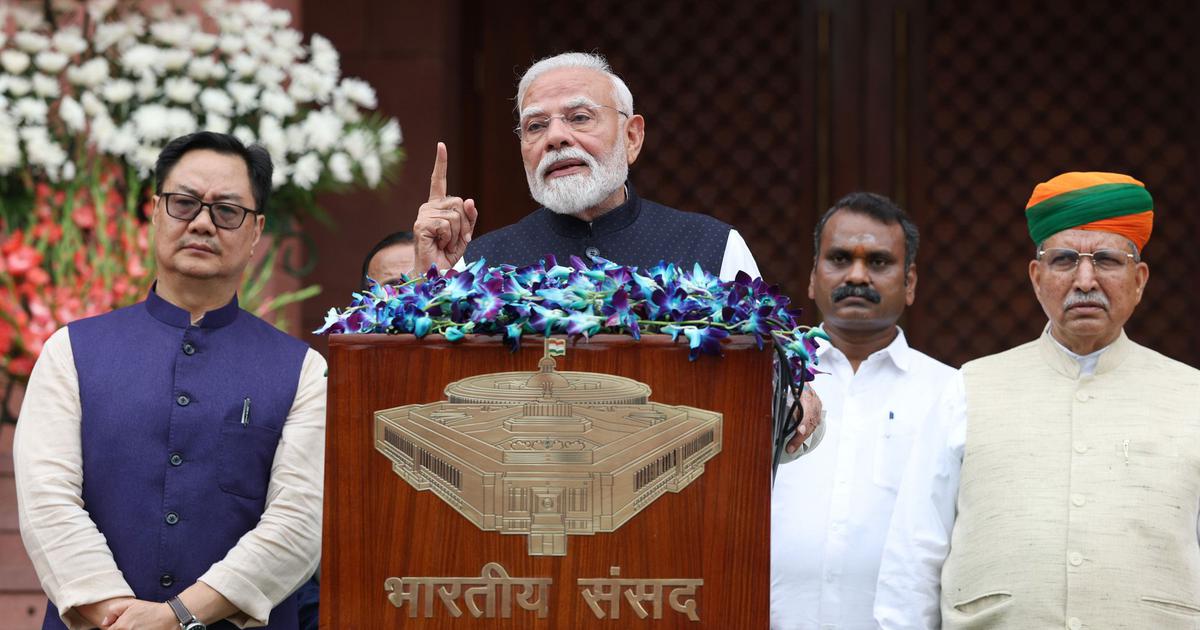
The BJP has turned Parliament deliberation into an obstruction of its mandate
Join our WhatsApp Community to receive travel deals, free stays, and special offers!
- Join Now -
Join our WhatsApp Community to receive travel deals, free stays, and special offers!
- Join Now -

In March, the Transgender Persons (Protection of Rights) Amendment Bill completed its passage through both Houses of Parliament in 12 – without committee scrutiny, without a recorded division, and over the objections of a Supreme Court-appointed expert committee that had recommended withdrawal pending meaningful consultation with affected communities. The incident was not exceptional.
PRS Legislative Research’s analysis of the 17th Lok Sabha (2019-’24) found that at least 35% of bills passed with less than one hour of discussion, and Parliament’s average annual sitting days have fallen from approximately 135 in the first Lok Sabha to 55 in the 17th.
Parliamentary majorities alone cannot explain this pattern. Although the Congress secured 404 seats in 1984 – a larger parliamentary majority than any obtained by the Bharatiya Janata Party since 2014 – the proportion of bills referred to Standing Committees remained substantially higher during that period than it is today. While the decline in parliamentary deliberation is readily observable, the political logic driving it remains poorly understood.
The circumvention of deliberative procedures under the BJP is increasingly presented not as an aberration requiring constitutional or political justification, but as a direct and sufficient expression of democratic mandate. This marks a qualitative shift in the relationship between executive power...
Read more
What's Your Reaction?
 Like
0
 Dislike
0
 Love
0
 Funny
0
 Angry
0
 Sad
0
 Wow
0