




































![Amazon Deal Alert | Livpure Aerofrost Neo 90L Desert Air Cooler – at Just ₹8,499 [MRP: ₹19,500]](https://savefree.in/uploads/images/202607/image_870x580_6a4f89b8ad0ac.webp?#)

![PunnkFunnk Astro Junior Wireless Bluetooth Headphones – Just ₹799 [MRP: ₹4,999]](https://savefree.in/uploads/images/202607/image_870x580_6a4f8e5cd5a3c.webp?#)
![Upgrade Your Entertainment Experience with boAt Aavante Bar 490 Soundbar at Now Only ₹799 [MRP: ₹3,490]](https://savefree.in/uploads/images/202607/image_870x580_6a4f91c4f2ebc.webp?#)

In the Himalayas, hardy buckwheat is a reliable alternative to failing crops

Join our WhatsApp Community to receive travel deals, free stays, and special offers!
- Join Now -
Join our WhatsApp Community to receive travel deals, free stays, and special offers!
- Join Now -

Buckwheat, once grown mostly in marginal soil in the Indian Himalayas, is now regaining attention for its nutritional properties and its ability to grow in harsh mountain conditions where other crops fail.
Apart from being a dependable food source, the crop’s abundant flowers support beekeeping, leading to the production of high-value buckwheat honey.
Scientists at Sher-e-Kashmir University of Agricultural Sciences and Technology (SKUAST-Kashmir) are now encouraging farmers to combine buckwheat cultivation with apiculture as a way to improve incomes and strengthen mountain agriculture.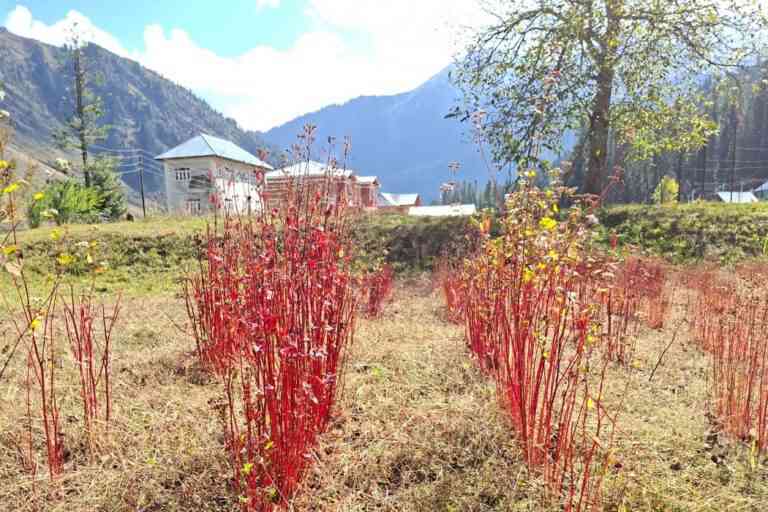
Resilient properties
Buckwheat is one of the pseudo-cereals (not belonging to the true grass family) that contains protein of high nutritional value, dietary fibre, resistant starch, vitamins and minerals.
Buckwheat – both the common buckwheat (Fagopyrum esculentum) and tartary buckwheat (Fagopyrum tartaricum) – is a high-altitude, cool-climate annual plant. It is native to Central Asia, cultivated in China and other Eastern countries as a bread-corn.
In India, the crop is widely grown in the high mountains of Jammu and Kashmir, Himachal Pradesh, Uttarakhand, Sikkim and Arunachal Pradesh. In South India, it is sporadically grown in the Nilgiris and Palani hills.
What makes buckwheat particularly suited to these regions is its ability to thrive where other crops struggle.
“Buckwheat adapts well to poor soils, high altitudes, and short growing seasons,” says Sajad Zargar, an associate professor...
Read more
What's Your Reaction?
 Like
0
Like
0
 Dislike
0
Dislike
0
 Love
0
Love
0
 Funny
0
Funny
0
 Angry
0
Angry
0
 Sad
0
Sad
0
 Wow
0
Wow
0