











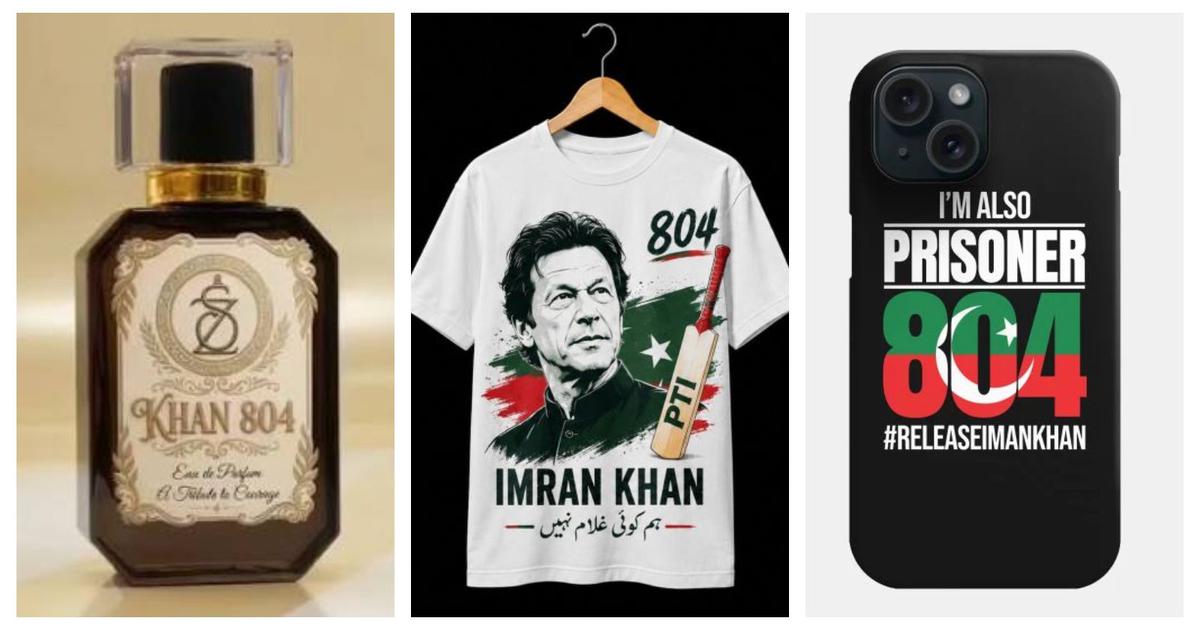
In Pakistan, Prisoner No 804 seems to be everywhere
Join our WhatsApp Community to receive travel deals, free stays, and special offers!
- Join Now -
Join our WhatsApp Community to receive travel deals, free stays, and special offers!
- Join Now -

It wasn’t unlike a solitary vigil.
On August 1, a social media post appeared showing a woman standing outside the Karachi Press Club, holding a painted portrait of Imran Khan, bearing the words: “Imran Khan ko riha karo”, free Imran Khan, and “Hamara leader hamen wapas dedo”, give our leader back to us.
The image of her quiet defiance elided with the Pakistan Tehreek-e-Insaf’s reignited street mobilisation, marking their leader’s three-year anniversary in prison.
Together, these instances illuminate a peculiar paradox: three years of incarceration instead of diminishing the former Pakistani prime minister’s symbolic appeal seem to actually have bolstered it.
Pakistan’s political playbook has long been recycled. Something drives a wedge between a political leader and the establishment. What follows is familiar: some combination of dismissal, disqualification, imprisonment or exile, with the eventual aim of irrelevance. Once enough time has passed and the political storm settles, an accommodation is usually reached.
The case of Khan somewhat unsettled the playbook. Khan’s own ascent to power was hardly predictable. Cricketing fame was followed by philanthropy and eventually politics, despite his initial reluctance to enter the field. After struggling to be taken seriously as a politician – a single seat in Parliament, boycotting a general election and some electrifying rallies – Khan’s...
Read more
What's Your Reaction?
 Like
0
Like
0
 Dislike
0
Dislike
0
 Love
0
Love
0
 Funny
0
Funny
0
 Angry
0
Angry
0
 Sad
0
Sad
0
 Wow
0
Wow
0