





































Goat’s tooth shows that ancient Greek food economy was more complicated than researchers thought
Join our WhatsApp Community to receive travel deals, free stays, and special offers!
- Join Now -
Join our WhatsApp Community to receive travel deals, free stays, and special offers!
- Join Now -

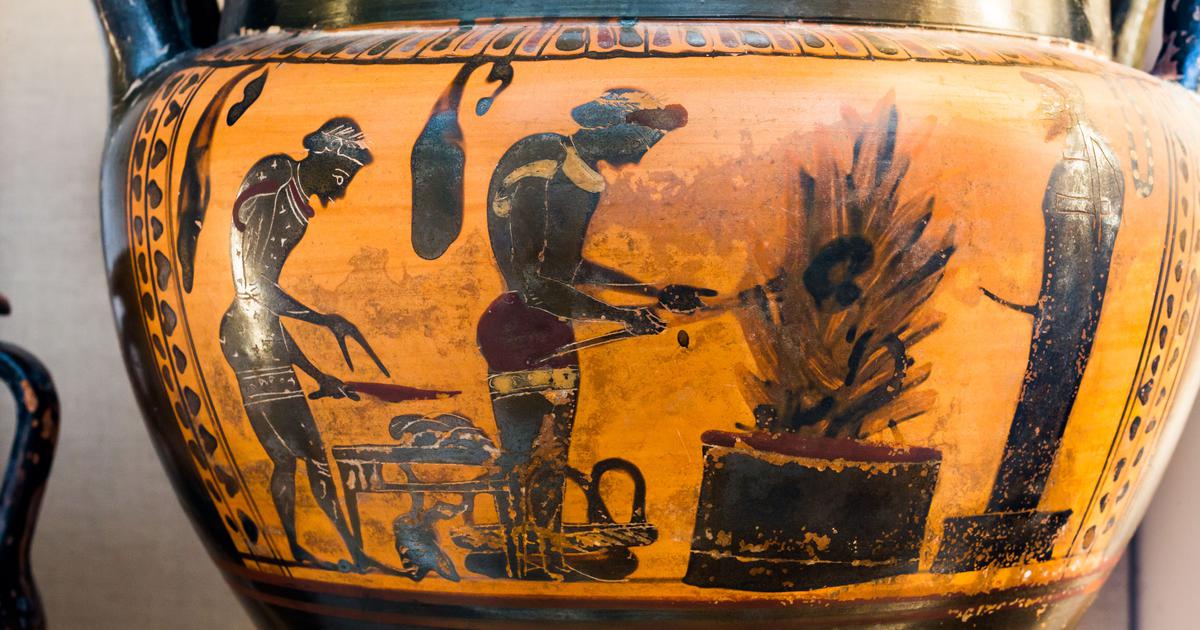
The agricultural economy was the backbone of wealth in ancient Greece. Food brought people together, whether in smaller groups at a wine-drinking symposium, or the entire community in a sacrificial feast of epic proportions. In The Odyssey, the ancient Greek epic poem, Odysseus’s son joins one of these early feasts – a community barbecue of 100 cattle.
Researchers have long recognised the economic, political and social importance of food in ancient Greece. But one key question has never been fully settled: how were animals actually raised within this system?
For nearly a century, academics have been locked in a debate over the organisation of ancient Greek animal husbandry. At one extreme is the idea of large, semi-nomadic herds moving seasonally across the landscape in search of pasture. At the other is a more intimate picture: smaller herds integrated into everyday farm life, feeding on local fields and crop by-products. In other words, were animals part of a mobile pastoral system, or woven tightly into mixed crop-and-livestock farms?
Along with an interdisciplinary team of archaeologists and scientists, I have analysed one of the largest assemblages of animal remains...
Read more
What's Your Reaction?
 Like
0
Like
0
 Dislike
0
Dislike
0
 Love
0
Love
0
 Funny
0
Funny
0
 Angry
0
Angry
0
 Sad
0
Sad
0
 Wow
0
Wow
0