






































‘Exotic’ pets are a growing health risk for humans and wildife
Join our WhatsApp Community to receive travel deals, free stays, and special offers!
- Join Now -
Join our WhatsApp Community to receive travel deals, free stays, and special offers!
- Join Now -

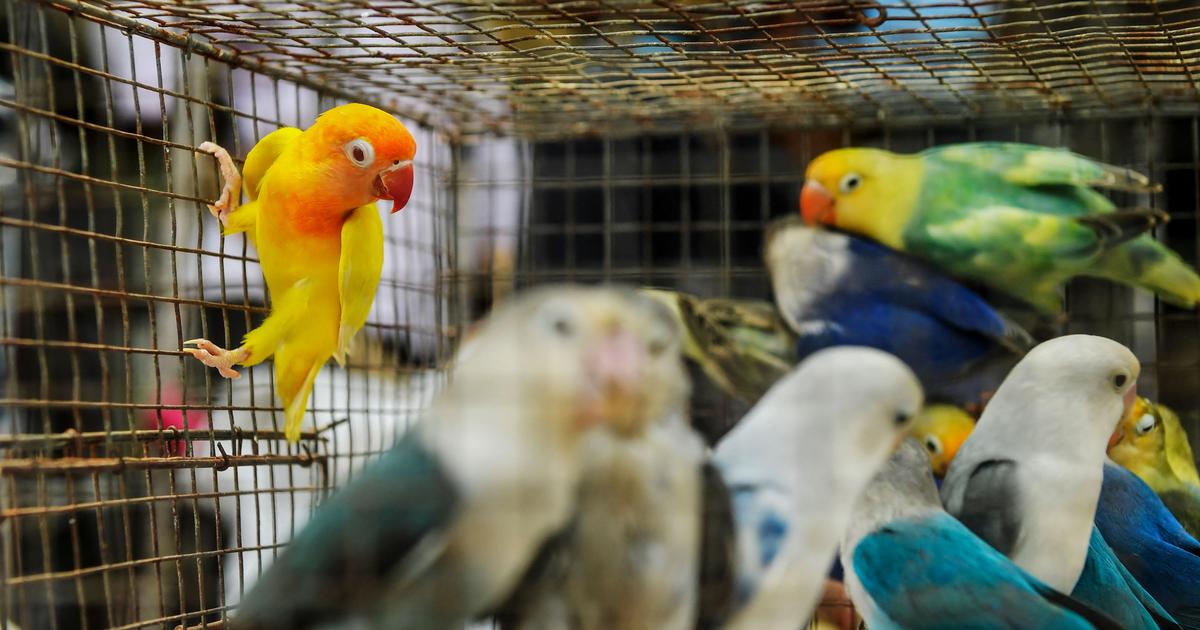
Mumbai-based veterinarian Dr Rina Dev was hospitalised for four days recently with a lung infection. “I hope it’s not something from the parrots I was treating,” she told Mongabay-India after being discharged from the hospital. Dr Dev is an avian and exotic animal veterinarian who works closely with the forest department to treat imported and seized exotic animals involved in the wildlife trade.
Her concerns are valid. Avian chlamydiosis, or psittacosis, is caused by the bacterium Chlamydia psittaci and is a common infection among people who handle birds, earning it the nickname “bird handler’s disease”.
A 2024 case from India describes a man contracting the infection after exposure to his pet parrot. In 1994, customs officers in Belgium contracted chlamydiosis after being exposed to infected parakeets. Multiple such documented cases link wildlife trade to human infection.
A comprehensive review of psittacosis by the ICAR-Indian Veterinary Research Institute in 2021 describes avian chlamydiosis as a “neglected disease” with “critical zoonotic potential”.
Pet trade link to zoonosis
Zoonoses, or zoonotic diseases, entered the ordinary Indian’s wellness lexicon when the Covid-19 pandemic exposed how pathogens can jump from animals to humans, causing serious medical consequences and, in some cases, a pandemic that can literally bring the world to a standstill.
The wildlife pet trade, especially the trade in exotic animals...
Read more
What's Your Reaction?
 Like
0
Like
0
 Dislike
0
Dislike
0
 Love
0
Love
0
 Funny
0
Funny
0
 Angry
0
Angry
0
 Sad
0
Sad
0
 Wow
0
Wow
0