





































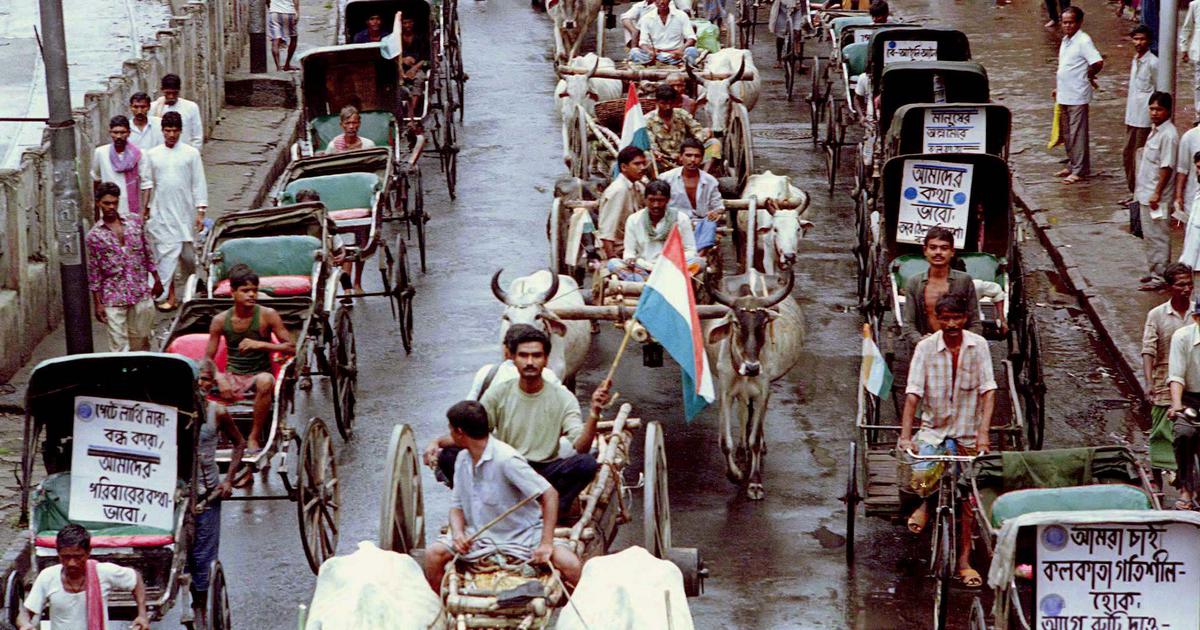
Did the apathy of Calcutta’s big business towards the city cause its economic decline?
Join our WhatsApp Community to receive travel deals, free stays, and special offers!
- Join Now -
Join our WhatsApp Community to receive travel deals, free stays, and special offers!
- Join Now -

In 1968, when West Bengal was put under President’s rule after the collapse of the United Front (UF) government, the Ford Foundation gave the Basic Development Plan one final push. The “Calcutta experiment”, as the Ford Foundation at times called it, had reached “a critical stage”. It could not walk away from a “massive planning effort in one of the largest cities of the underdeveloped world” without “descending from the high atmosphere of planning to the nitty-gritty of development – which is the test of planning”.
Now was the time, the foundation felt, to “capitalise and solidify the gains made in seven difficult years of work in Calcutta”. For many Ford Foundation officials – and this assessment was also shared by McNamara’s World Bank – “after the questions of food production and family planning, urbanisation represent[ed] the greatest problem of India and indeed of most developing economies in the next few decades”. Yet, the world was unprepared to tackle questions of urbanisation. For instance, more thought still needed to be given to the “deeper and more intricate question of directing the pressures of urbanisation toward national goals of economic and social development”.
Thus, the foundation was not going to “withdraw lightly from this difficult...
Read more
What's Your Reaction?
 Like
0
 Dislike
0
 Love
0
 Funny
0
 Angry
0
 Sad
0
 Wow
0