














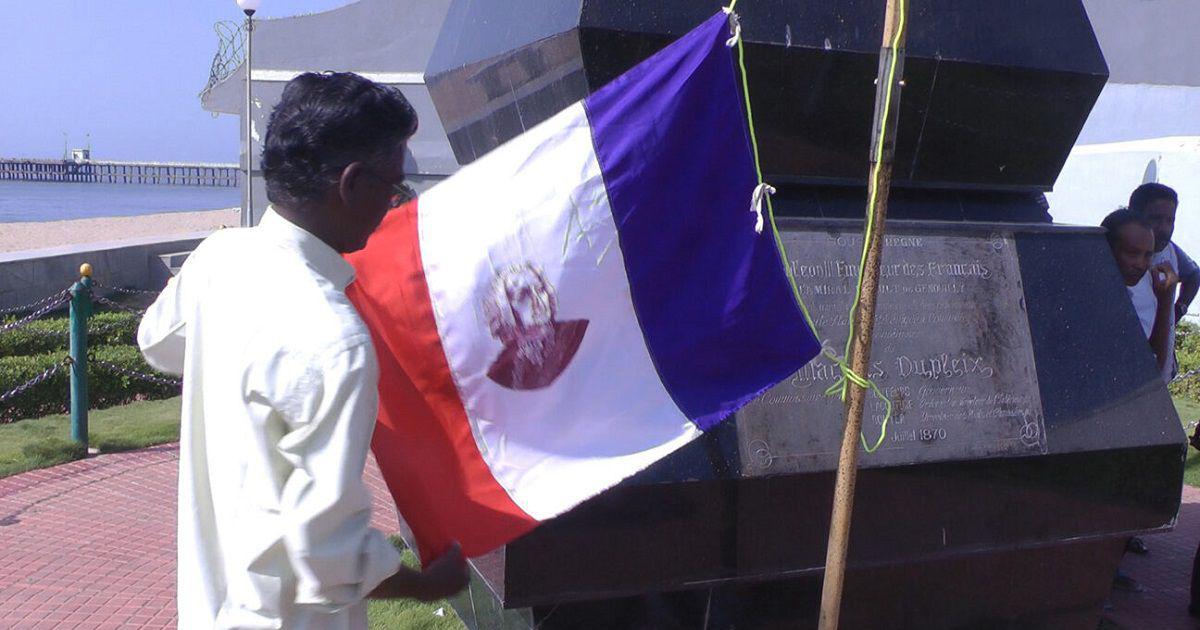
What the saga of Monsieur Mounissamy tells us about Franco-Indian identity
Join our WhatsApp Community to receive travel deals, free stays, and special offers!
- Join Now -
Join our WhatsApp Community to receive travel deals, free stays, and special offers!
- Join Now -

If Gregor Samsa had been born in Pondicherry, he wouldn’t have awakened as a cockroach but as a chameleon. He would have been named accordingly, such as Jean-Grégoire Samoussapoullé, Grégoire Samikkannu, Grégorius Samassamy-Mudaliar, or, with a touch of aristocratic eccentricity, Grégoire-Marie Samassamy de Oulgaret.
Because of a colonial absurdity dating back to 1962, thousands of people find themselves in this Kafkaesque limbo, caught between two nations, two cultures, two identities, and two flags. They wake to the opening bars of La Marseillaise and go to sleep humming Jana Gana Mana. Their identity eludes both France and India, while the truly schizophrenic Franco-Pondicherrians sing neither anthem correctly. As the sun sets, they forsake both anthems for Marie, le pêcheur, an old Creole tune that drunkards sing off-key in the city’s countless bars. This timeless melody, appropriate for no nation, belongs to everyone and nowhere at once.
“My father moved with ease between the language of Molière and that of Thiruvalluvar, while my uncle knew only Tamil. The former was French, the latter Indian. This anomaly stemmed from an absurdity inherited from colonial power in 1962.”
I wrote that sentence long before I ever encountered Mounissamy, the subject of Pankaj Rishi Kumar’s documentary To Die a Frenchman.
When Le Thinnai was released, I was taken aback to find...
Read more
What's Your Reaction?
 Like
0
Like
0
 Dislike
0
Dislike
0
 Love
0
Love
0
 Funny
0
Funny
0
 Angry
0
Angry
0
 Sad
0
Sad
0
 Wow
0
Wow
0