




































The Mughal emperor who tried to merge Vedanta with Islam
Join our WhatsApp Community to receive travel deals, free stays, and special offers!
- Join Now -
Join our WhatsApp Community to receive travel deals, free stays, and special offers!
- Join Now -

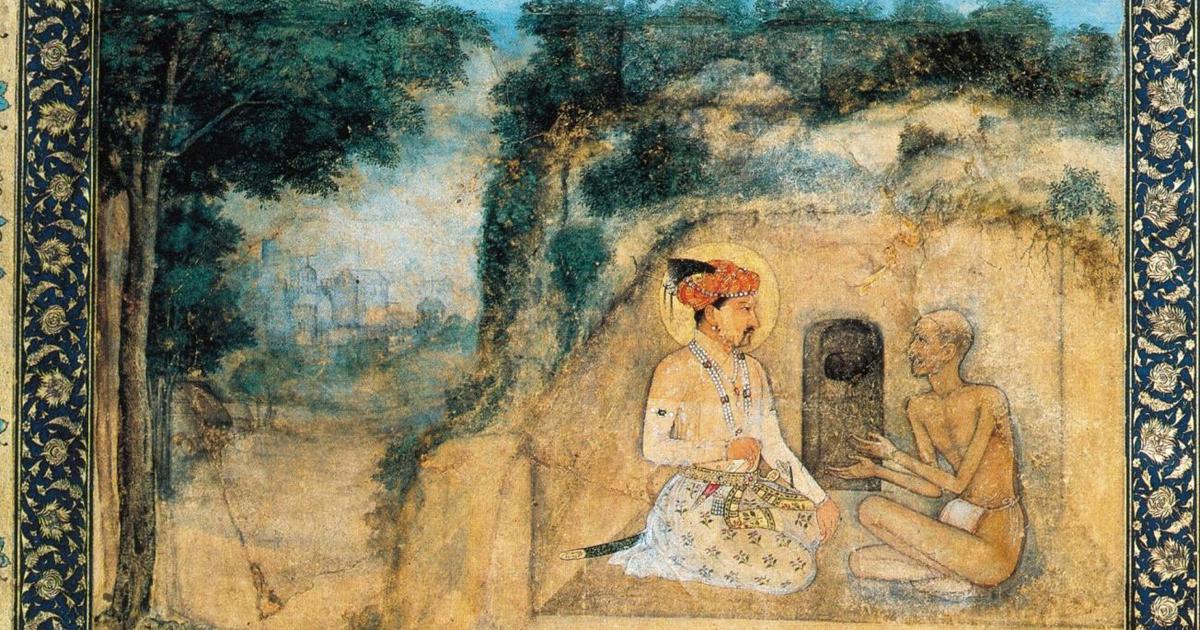
In the winter of 1617, the fourth Mughal emperor did something unusual. Jahangir dismounted from his royal procession, walked to a narrow cave near Ujjain, and squeezed his body through an entrance so small that even a thin person would have struggled to enter it.
Inside lived a man whose real name was Chitrup, though history knows him as Jadrup Gosain. He was a Vedantic ascetic who had renounced the world at 22 and spent 38 years in austerity, eating five mouthfuls of food daily, bathing twice a day, and meditating on the identity of the individual self with ultimate reality.
Jahangir, by contrast, was a man of excess and contradiction. He drank heavily, struggled with guilt over the rebellion of his son Khusrau, and yet he yearned for detachment with an intensity that bordered on obsession.
Over two years, he would return to Jadrup’s cell repeatedly, not for political advice or military intelligence, but to talk about philosophy. These were not casual conversations. Jahangir was attempting something intellectually audacious: to prove that Vedanta and Sufism were essentially the same, expressed in different languages.
Vedanta is the philosophical school of Hinduism that teaches the identity of the individual self (atman) with ultimate reality (brahman) as revealed in the Upanishads. Sufism is the...
Read more
What's Your Reaction?
 Like
0
Like
0
 Dislike
0
Dislike
0
 Love
0
Love
0
 Funny
0
Funny
0
 Angry
0
Angry
0
 Sad
0
Sad
0
 Wow
0
Wow
0