































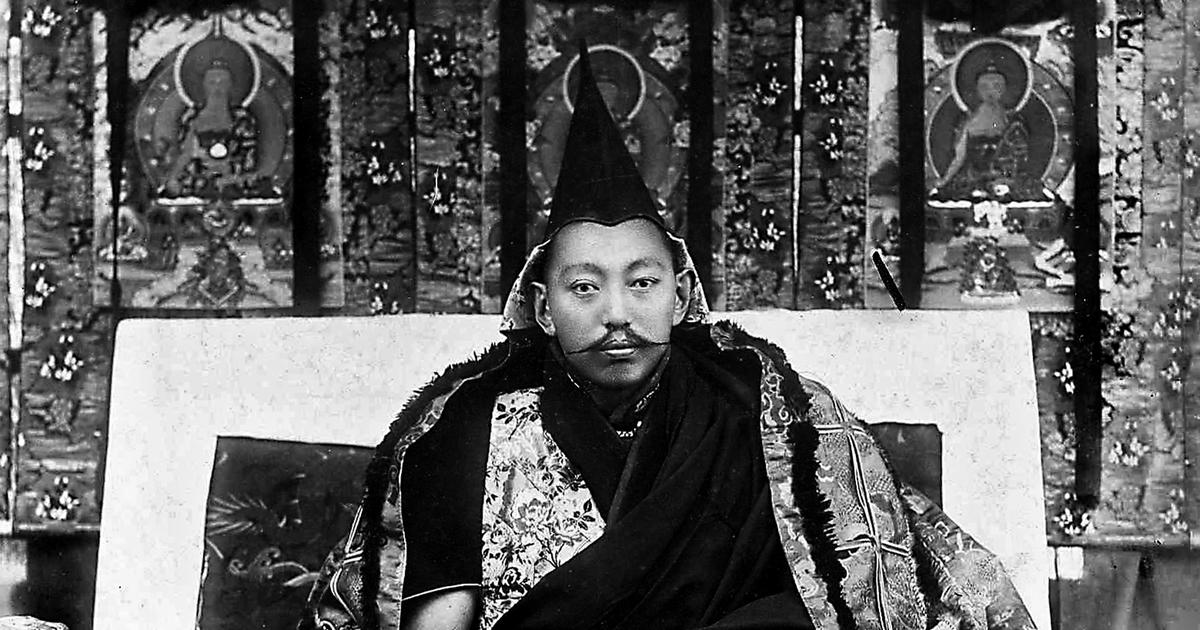
The 13th Dalai Lama fled Tibet for India long before his successor’s famous escape
Join our WhatsApp Community to receive travel deals, free stays, and special offers!
- Join Now -
Join our WhatsApp Community to receive travel deals, free stays, and special offers!
- Join Now -

In February 1910, the Associated Press flashed a dramatic bulletin: the “Tibetan Pope” had fled Lhasa, narrowly escaping Chinese troops who pursued him all the way to the Tibet-Sikkim border. Thubten Gyatso, the 13th Dalai Lama, then a 34-year-old, was walking a high-stakes geopolitical tightrope. The Qing Dynasty was on its last legs in China, while the British and Russian empires were vying for influence over Tibet.
Describing his escape as “narrow”, the Associated Press reported that the spiritual leader travelled day and night. At a river crossing, Chinese forces caught up with the Tibetan entourage, but his followers fought off the pursuers, buying enough time for the Dalai Lama to cross into British-protected Sikkim. From there, he journeyed to Darjeeling and requested asylum from British authorities.
The situation was a deeply ironic twist of fate. Only three months earlier, the Dalai Lama had returned to Lhasa after six years in exile. That initial flight had been triggered by the British themselves, whose 1904 invasion of Tibet, led by Colonel Francis Younghusband, forced the leader to flee to Mongolia under the influence of the Russian Buryat monk Agvan Dorzhiev.
During his two years in Urga (now Ulaanbaatar), the Dalai Lama hoped the tsar of Russia, Nicholas...
Read more
What's Your Reaction?
 Like
0
Like
0
 Dislike
0
Dislike
0
 Love
0
Love
0
 Funny
0
Funny
0
 Angry
0
Angry
0
 Sad
0
Sad
0
 Wow
0
Wow
0