

































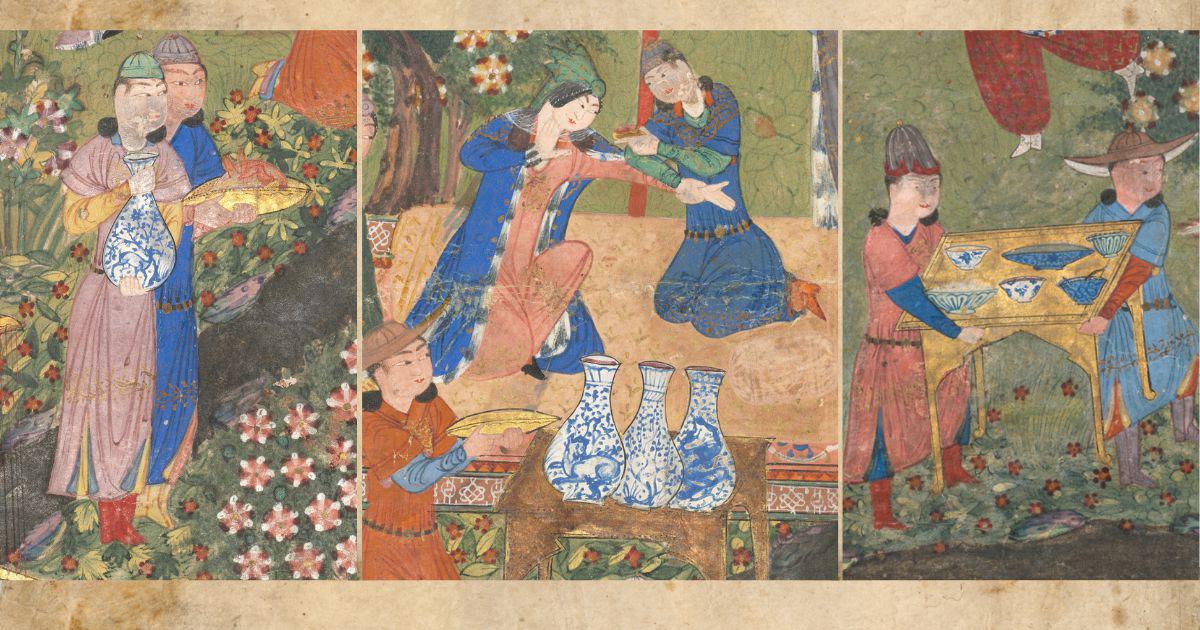
Long before AI ‘food dramas’, there was Arabic and Persian culinary poetry
Join our WhatsApp Community to receive travel deals, free stays, and special offers!
- Join Now -
Join our WhatsApp Community to receive travel deals, free stays, and special offers!
- Join Now -

Strawberrito is cheating on her husband Banananito. Chawal falls for Tacito (taco) during a trip to Mexico while his girlfriend Rajma pines away in their village in Punjab. Potato discovers the money-laundering scheme of his co-worker Brinjal at Onion’s car repair firm.
This is one genre of the ever-expanding, AI-generated universe of brain-rot reels: talking food and beverages, perpetually caught up in one drama-filled predicament or another.
Watching these “food dramas” was a reminder of a similar – though considerably more imaginative and decidedly less cringe-worthy – phenomenon that flourished across the interconnected Persian, Arabic, and Urdu literary worlds.
Between the 11th and 19th centuries, poets and storytellers from Cairo to Shiraz and Hindustan transformed flowers, trees, fruits, vegetables, and kitchen ingredients into rivals, vigilantes, rulers, counselors, and companions, endowing them with voices, personalities, and ambitions of their own. Through their quarrels, alliances, and adventures, these poets reflected on the social and cultural transformations of their times.
Many of these literary conceits are familiar to contemporary readers through the poetry of Rumi, Sa’di, Hafiz, Mirza Ghalib, and even the playful riddles posthumously attributed to Amir Khusrau.
In their verses, the rose could appear as a beloved, a bride, a queen, or the sovereign of the garden enthroned...
Read more
What's Your Reaction?
 Like
0
Like
0
 Dislike
0
Dislike
0
 Love
0
Love
0
 Funny
0
Funny
0
 Angry
0
Angry
0
 Sad
0
Sad
0
 Wow
0
Wow
0










![Cruise 2 Ton 3 Star Inverter Split AC – Now Only ₹38,490 [MRP: ₹64,900] on Amazon!](https://savefree.in/uploads/images/202607/image_870x580_6a6870eb6880c.webp?#)