













![75-Inch Xiaomi QLED 4K Smart Google TV at Just ₹69,999 [MRP: ₹1,19,999] — Limited-Time Amazon Deal!](https://savefree.in/uploads/images/202608/image_870x580_6a76d4ff79dd9.webp?#)



Beyond the hijab ban: Karnataka’s reversal and the constitutional cost of majoritarian uniformity

Join our WhatsApp Community to receive travel deals, free stays, and special offers!
- Join Now -
Join our WhatsApp Community to receive travel deals, free stays, and special offers!
- Join Now -

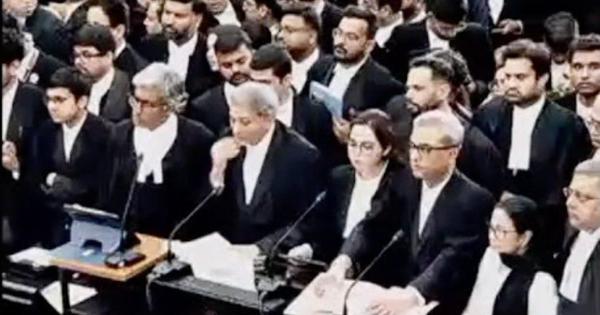
The Karnataka government’s decision last week to withdraw the 2022 order of the previous Bharatiya Janata Party government that effectively prohibited hijab in pre-university colleges has been viewed as a constitutional correction. Yet, the withdrawal also exposes a difficult truth: constitutional injuries do not disappear merely because the state retracts a notification.
For the Muslim women who lost years of education and were forced to abandon their academic aspirations because they refused to remove the hijab, the reversal comes after significant damage has already been done, especially in terms of lost educational and professional opportunities.
The testimonies of students such as Aliya Assadi, AH Almast, Resham Farook and Muskan Zainab, who challenged the ban in court, demonstrate that the hijab controversy was never a narrow dispute over uniforms. It was fundamentally about whether constitutional citizenship in India permits visible minority identity in public educational spaces.
The answer offered by the state four years ago was deeply troubling: inclusion would be conditional upon conformity.
Members of Sri Ram Sene staged a protest outside the Deputy Commissioner’s office in Kalaburagi recently against the State government’s recent circular allowing students to wear religious symbols, including the hijab, along with school uniforms.https://t.co/ja2SYWbZss— The Hindu (@the_hindu) May 17, 2026
Constitutional misunderstanding
The Karnataka...
Read more
What's Your Reaction?
 Like
0
Like
0
 Dislike
0
Dislike
0
 Love
0
Love
0
 Funny
0
Funny
0
 Angry
0
Angry
0
 Sad
0
Sad
0
 Wow
0
Wow
0