



























A bittersweet archive: The history of sohan halwa
Join our WhatsApp Community to receive travel deals, free stays, and special offers!
- Join Now -
Join our WhatsApp Community to receive travel deals, free stays, and special offers!
- Join Now -

My maternal and paternal families migrated to Delhi from Multan during the Partition of India and Pakistan. Growing up, I was surrounded by living witnesses to that rupture: my grandfather’s maternal grandmother, who passed away in 1995; my paternal great-grandfather; my maternal great-grandmother; and their acquaintances and friends.
They often recalled their journey on overcrowded trains to refugee colonies in Delhi and Haryana, including the loss of a sibling – a story my father’s maternal aunt mentioned in passing several times, without wanting to delve into further details.
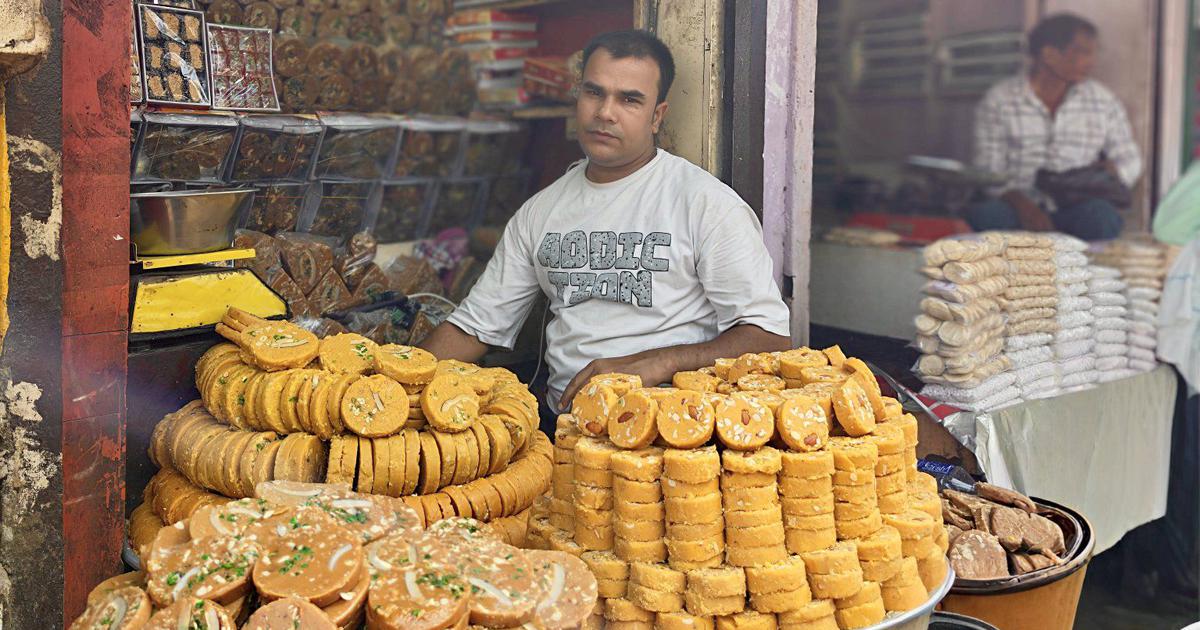
Though physically displaced, fragments and memories of Multan travelled with them. One being the language – Multani, or Sariki as it is more commonly called today – which was actively spoken at home until my paternal great-grandfather, Lala Ji, passed away in 2007. And the other, a sweetmeat called sohan halwa, the spelling more commonly used today. However, I will refer to it as halwa-i sūhan or sūhan halwa for the reason that will become apparent shortly.
A quick Google search will tell you that Multan, alongside Sufis and pottery, remains synonymous with sūhan halwa. Members of the Multani community displaced during Partition established many sweet shops across North India, including in Faridabad, where my grandparents eventually settled;...
Read more
What's Your Reaction?
 Like
0
Like
0
 Dislike
0
Dislike
0
 Love
0
Love
0
 Funny
0
Funny
0
 Angry
0
Angry
0
 Sad
0
Sad
0
 Wow
0
Wow
0