
























![Travel Smart in Style – Safari Genius Alley 3-Piece Trolley Bag Set At Just Rs. 4,799 [MRP Rs. 27,997]](https://savefree.in/uploads/images/202603/image_870x580_69ba745807dff.webp?#)

![Upgrade Your Home Décor with Stylish & Comfortable Carpet With Elegant Designs Just Rs. 279 [MRP Rs. 999]](https://savefree.in/uploads/images/202603/image_870x580_69bb73d51a19d.webp?#)



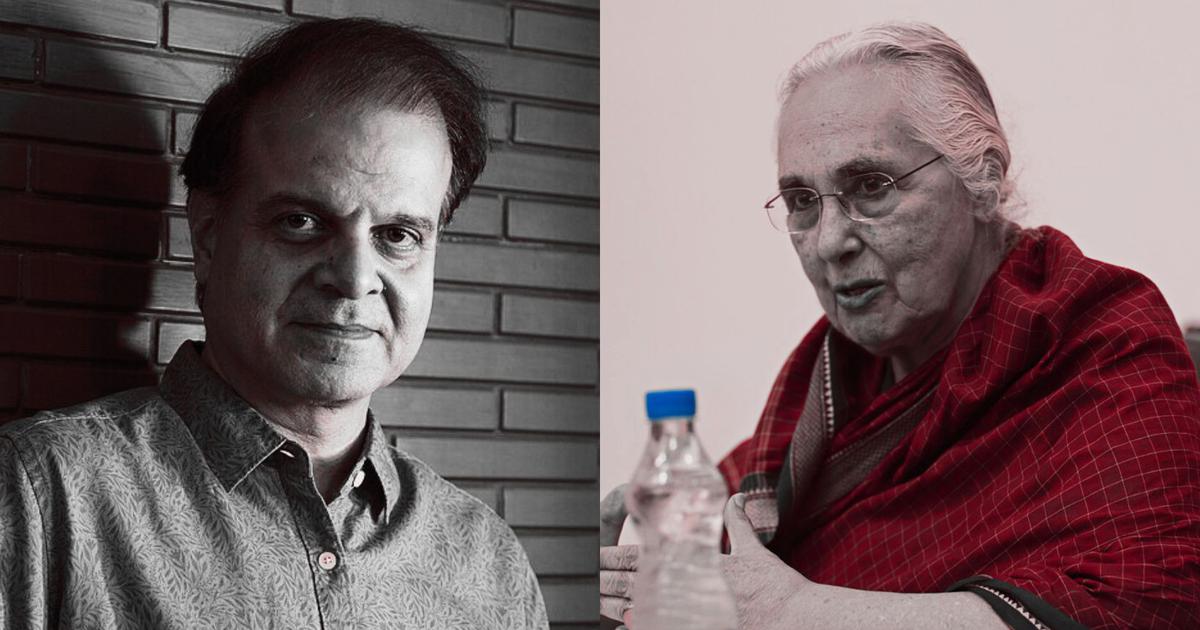
The question of anachronism in Romila Thapar and Namit Arora’s new book, ‘Speaking of History’
Join our WhatsApp Community to receive travel deals, free stays, and special offers!
- Join Now -
Join our WhatsApp Community to receive travel deals, free stays, and special offers!
- Join Now -

In the recently published book Speaking of History, a conversation between historian Romila Thapar and Namit Arora, the writer and social critic who also practises public history, the participants touch upon many interesting matters of cultural and social history that provoke further conversations.
Since a large part of the book revolves around India’s cultural history and the debates around it, I would like to primarily take up the question of culture.
To begin with, Thapar describes how the new idea of culture incorporates social “patterns of life,” while, conversely, society is defined by the “pattern of culture”. The equation between society, life and culture is such that one seems to feed the meaning of the other.
I want to open up this question by reading The Discovery of India, where Jawaharlal Nehru pauses to pay attention to “the problem of human relationships” and mentions the ancient world of China and India as countries that “developed patterns of social behaviour” that offered a sense of “poise to the individual”. Nehru wonders if this poise resists historical time and is “opposed to progressive change”. Yet, Nehru believes that a certain balance between poise and progress, between science and wisdom, is desirable.
Narratives of cultural decline
Scholars who keep on harping about Nehru’s penchant for science and...
Read more
What's Your Reaction?
 Like
0
Like
0
 Dislike
0
Dislike
0
 Love
0
Love
0
 Funny
0
Funny
0
 Angry
0
Angry
0
 Sad
0
Sad
0
 Wow
0
Wow
0