


























How a geologist built a Hindustani music oasis in a steel town
Join our WhatsApp Community to receive travel deals, free stays, and special offers!
- Join Now -
Join our WhatsApp Community to receive travel deals, free stays, and special offers!
- Join Now -

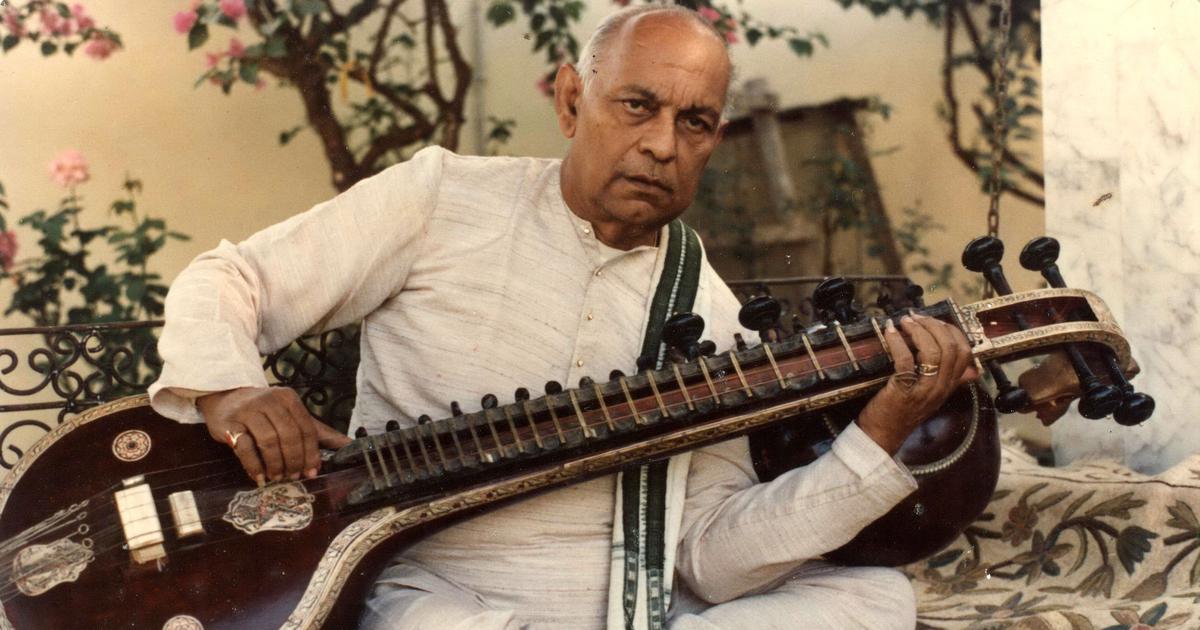
Imagine India’s first steel plant, newly forged with socialist aspirations and carved out of a village in the baking plains of Central India. Now imagine this industrial complex, crisscrossed by blast furnaces, conveyor belts, chimneys and cranes, as an oasis for Indian classical music. That is precisely what Bhilai was to become, driven by the passion of a gentle, unassuming geologist.
Bimalendu Mukherjee combined two seemingly polar skills: he was a sitariya of the Imdadkhani gharana with a prodigious understanding of string instruments and also an expert prospector of mines who supervised the flow of ores that fed the steel plant. He belongs to that quiet league of unacknowledged evangelists of Hindustani music who dedicated their lives in small, unexpected corners of India to bring art into the lives of common people.
Over nearly six decades, as the steel city grew to become the backbone of Indian railways and industries, Mukherjee turned Bhilai into an important hub for Hindustani music. It became a town that drew every legend of the era, from Vilayat Khan, Roshan Kumari and Bade Ghulam Ali Khan to Amir Khan, Ravi Shankar, Kumar Gandharva, Bhimsen Joshi and Girija Devi. Its new residential quarters housed some of the country’s best and...
Read more
What's Your Reaction?
 Like
0
Like
0
 Dislike
0
Dislike
0
 Love
0
Love
0
 Funny
0
Funny
0
 Angry
0
Angry
0
 Sad
0
Sad
0
 Wow
0
Wow
0






![Cruise 2 Ton 3 Star Inverter Split AC – Now Only ₹38,490 [MRP: ₹64,900] on Amazon!](https://savefree.in/uploads/images/202607/image_870x580_6a6870eb6880c.webp?#)