




































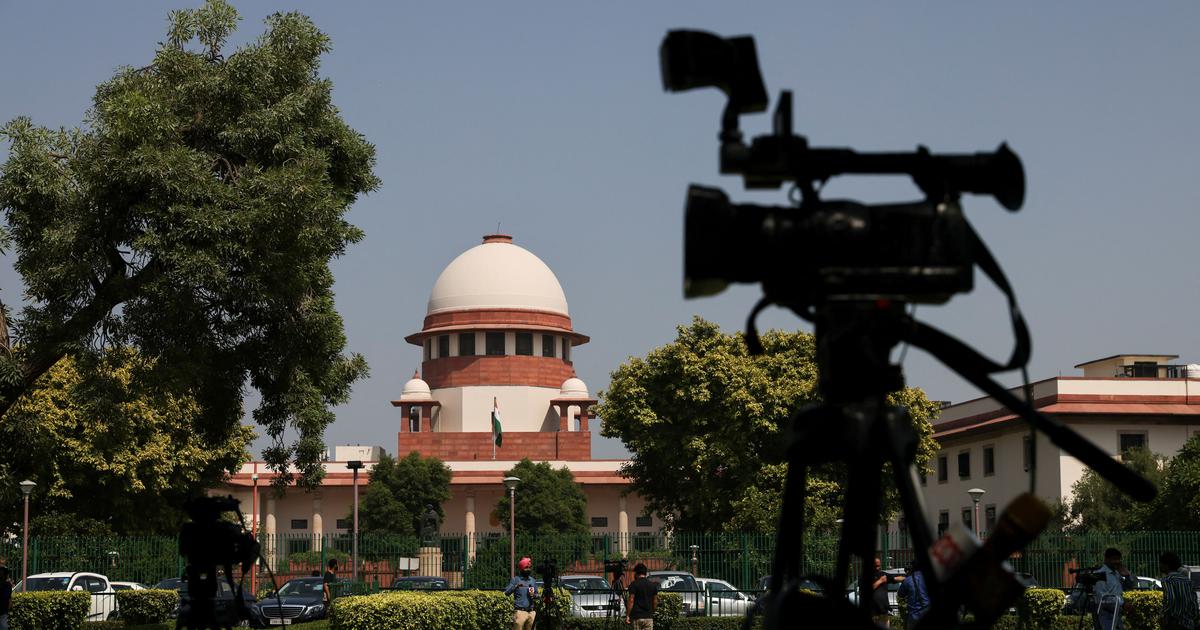
Sabarimala case: Secular court cannot determine if religious practice is superstition, says Centre
Join our WhatsApp Community to receive travel deals, free stays, and special offers!
- Join Now -
Join our WhatsApp Community to receive travel deals, free stays, and special offers!
- Join Now -

The Union government on Wednesday said that a secular court cannot determine whether a religious practice amounts to superstition, Bar and Bench reported.
Solicitor General Tushar Mehta, representing the Union government, made the contention before a nine-judge bench hearing a case involving constitutional questions related to the entry of women into Kerala’s Sabarimala temple and discrimination at other religious places.
In September 2018, a five-judge Constitution bench had, by a 4:1 majority, lifted a ban on women of menstruating age from entering the Ayyappa temple at Sabarimala.
However, in November 2019, another five-judge bench, in response to review petitions against the verdict, referred a set of broader legal questions about the freedom of religion to a nine-judge bench.
The bench comprises Chief Justice Surya Kant, along with Justices BV Nagarathna, MM Sundresh, Ahsanuddin Amanullah, Aravind Kumar, Augustine George Masih, Prasanna B Varale, R Mahadevan and Joymalya Bagchi.
The court began hearing the matter on Tuesday.
On Wednesday, Mehta told the bench that if religion does not interfere with the state, then the state must also not interfere with religion.
He added that it would not be within the domain of the courts to decide what constitutes “superstition”, and that this power lay with the legislature under Article 25(2)(b) of the Constitution, Live Law reported.
Article 25(2)(b) empowers the state to regulate, restrict or reform...
Read more
What's Your Reaction?
 Like
0
Like
0
 Dislike
0
Dislike
0
 Love
0
Love
0
 Funny
0
Funny
0
 Angry
0
Angry
0
 Sad
0
Sad
0
 Wow
0
Wow
0